Elina Ansary
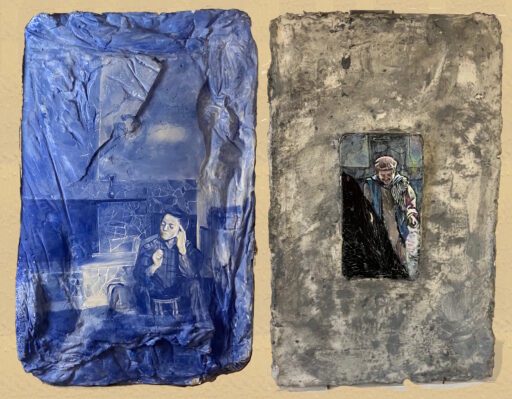
Last fall, shortly after I started my Master’s degree in visual art at Cornell University, the bloody, genocidal chaos erupted in Gaza. College campuses across the US became the battleground for a ferocious debate. It was a discomfiting time to be a Jewish Muslim Afghan American in a university setting. All of my artistic research centers on my heritage and how it shapes my perception of reality and time, compounding my sense of having nowhere to hide. And then one morning, I woke up to the news that Trump had been re-elected.
In 2023, shortly after I started my Master’s degree in visual art at Cornell University, the bloody, genocidal chaos erupted in Gaza. College campuses across the US became the battleground for a ferocious debate. It was a discomfiting time to be a Jewish Muslim Afghan American in a university setting. All of my artistic research centers on my heritage and how it shapes my perception of reality and time, compounding my sense of having nowhere to hide. And then one morning, I woke up to the news that Trump had been re-elected.
My graduate school experience put the ongoing chaos of the world into sharp focus. One fact stood out clearly: we live in a framework constructed from violent hierarchies that relegate us into separate categories of varying privilege. Our unsinkable human survival instinct has bred into us, mechanisms that enable each of us to stay alive within this flawed framework. The paradox is that our survival tools depend on the framework, and by trying to survive, we also participate in it and thus reinforce it.
Audre Lorde’s short essay, The Master’s Tools Will Never Dismantle the Master’s House, explores that paradox. She contemplates what it means to be welcomed as an under-considered afterthought into a white feminist academic conference, urging us to develop new tools in favor of upholding a framework that wasn’t built to take care of us. She says, “Those of us who stand outside the circle of this society’s definition of acceptable women; those of us who have been forged in the crucibles of difference–those of us who are poor, who are lesbians, who are Black, who are older–know that survival is not an academic skill. It is learning how to take our differences and make them strengths.”
Those of us who have been forged in the crucible of difference – these words resonated for me, a person built from paradoxical combinations. In a world where our differences determine our room assignments, I hover in hallways, ducking from room to room, unsure where to place myself when my primary defining feature is my contradictory identity.
Zooming out, I see a divided and polarized world where our differences have sorted us into teams, and the teams are tearing everything apart. When you play for multiple teams, the fight loses its logic and unravels. That day, watching the 2024 election results rolling in, watching the whole middle of the map swell to an angry red, it looked like the unraveling was gaining speed. I saw myself, huddled in the blue cluster in the east, my parents across a hostile sea on the west coast, my sister adrift in Florida.
Where can we possibly go from here? The prevailing feeling is that our system is broken beyond repair, and it’s time to rise up. I agree wholeheartedly with that, but I wonder what ‘rising up’ actually entails, and if it has to be a complete dismantling.
Let’s think about the metaphor of a house. The house, in this metaphor, is our society, our civilization. perhaps our world. We all live in the same house but we see different corners of it. The few who sleep in the master’s quarters see the comfort of their four poster beds, the silk drapes. Those of us shivering in the attic know the house needs a major renovation. But how do we fix this house?
It feels like we’ve been renovating for years, refinishing the floors only to rip the boards up again, painting the walls until chunks of plaster come raining down on our heads. It won’t work to simply switch bedrooms–that still places some people in the attic. And besides, people who sleep comfortably don’t take kindly to their duvets being ripped from their beds.
I think many people can only imagine revolution as a complete dismantling. I can understand that. At a certain point, a house may be so rotten that the only pragmatic thing to do is demolish it and start from scratch.
But the problem is, if you tear the house down, you have nowhere to live. And furthermore, there are people sleeping in the attic: the elderly, the sick, the children, the refugees. If we set the house on fire, they perish with it.
We know we can’t fix this house through a thousand tiny repairs, not when the structure is crumbling. And it’s not enough to walk around pointing out the cracks in the foundation.
We know we need a house where every room has a comfortable bed, and where, downstairs, there’s a table laden with food, and there’s a seat for everyone. A house with leaders and caretakers, not servants and masters. But how do we build that house without creating rubble, without sacrificing the most vulnerable among us?
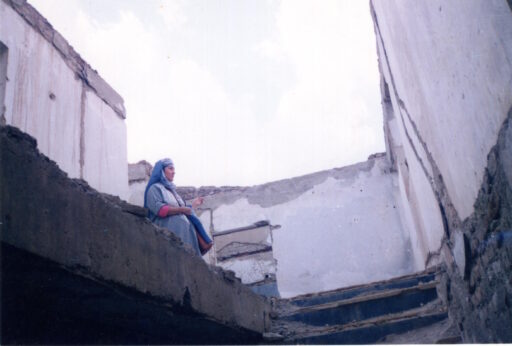
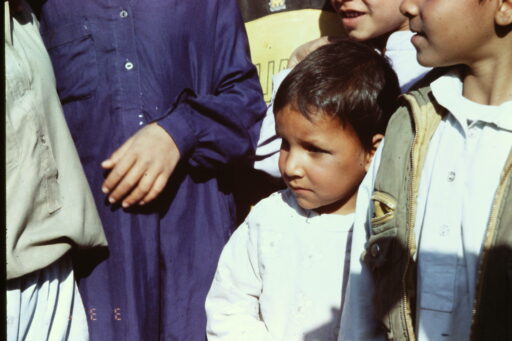
I ask this question because I know what happens when the whole house comes down; it’s what happened to the house my father grew up in, in Kabul. When that happens, you’re left with rubble. I have only seen my grandfather’s house through shaky camcorder footage recorded 38 years after my father left Afghanistan. There was no roof, and children dressed in rags were living under the crumbling stairs.
From the rubble, it wasn’t a phoenix that rose, but a monster with the haunted eyes of those children, all grown up and forged in the crucible of ruins.
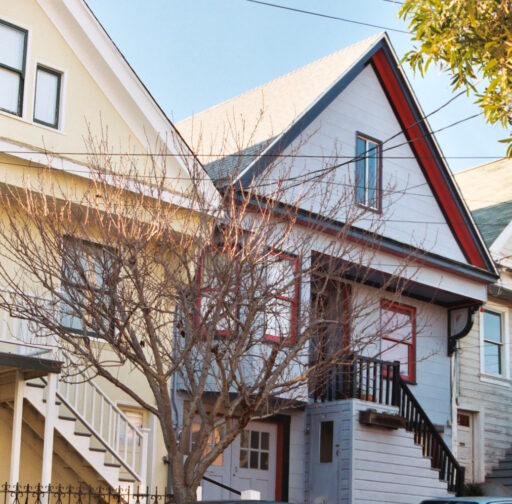
Let me offer up another house as metaphor: the house in which I was raised.
When my parents bought what would become my childhood home, it was a real fixer-upper. They bought it for a song, and they had no more money left, so my dad renovated it with the help of his carpenter friend. They soon discovered that termites had infested the house’s very bones. They found this out when my father put his hand on a supportive beam in the basement and it crumbled into dust.
What a disaster! They’d sunk every penny into a house about to topple over. They had a young daughter (my older sister) who would have nowhere to live if this house fell down. But the carpenter had a plan. He built a whole new joist system alongside the old one from a type of wood impervious to termites. Only when the framework was firmly in place would they remove the infested, crumbling beams.
Finally, the day came to remove the old joists. My father was terrified, “Are you sure it’ll work?”
The carpenter shrugged, “No. I’ve never done it before. But I think it will. Now– when we remove the joists, listen for a rumbling sound or a creaking. If you hear anything–run.“
So, they took a leap of faith. They had rebuilt the house from the inside out, feeling around in the dark, imagining it into existence, and thus managed to save the house without knocking it down. Thirty-eight years later, the house still stands.
Now, in my metaphorical house—my society, my country, my world–the broader framework seems to be rotting a way all around me. Today, I will go to my studio and lock the door. Art is the best tool I possess to help conjure a new framework from the void that surrounds us now. I hope you, too, will pick up the tool you wield best, and start the work alongside me.
When I go to the studio, I remember the words of my great great great great grandfather, an 18th-century sufi mystic buried in the earth beneath that land of rubble:
Know that if you launch, you will arrive
Attempt, and you’ll reap bounty
Play your part: aspire
The cosmic soul will notice your desire
–Sheikh Sa’duddin Ansary
(Translated to English by Tamim Ansary)